

There is an invisible job that repeats every month in plenty of companies around here: making the hours add up. Who clocked in, who doubled up, who swapped a shift with whom. The custom software in Cornellà de Llobregat we get asked for most is not a big system: it is the screen that takes that afternoon off the calendar.
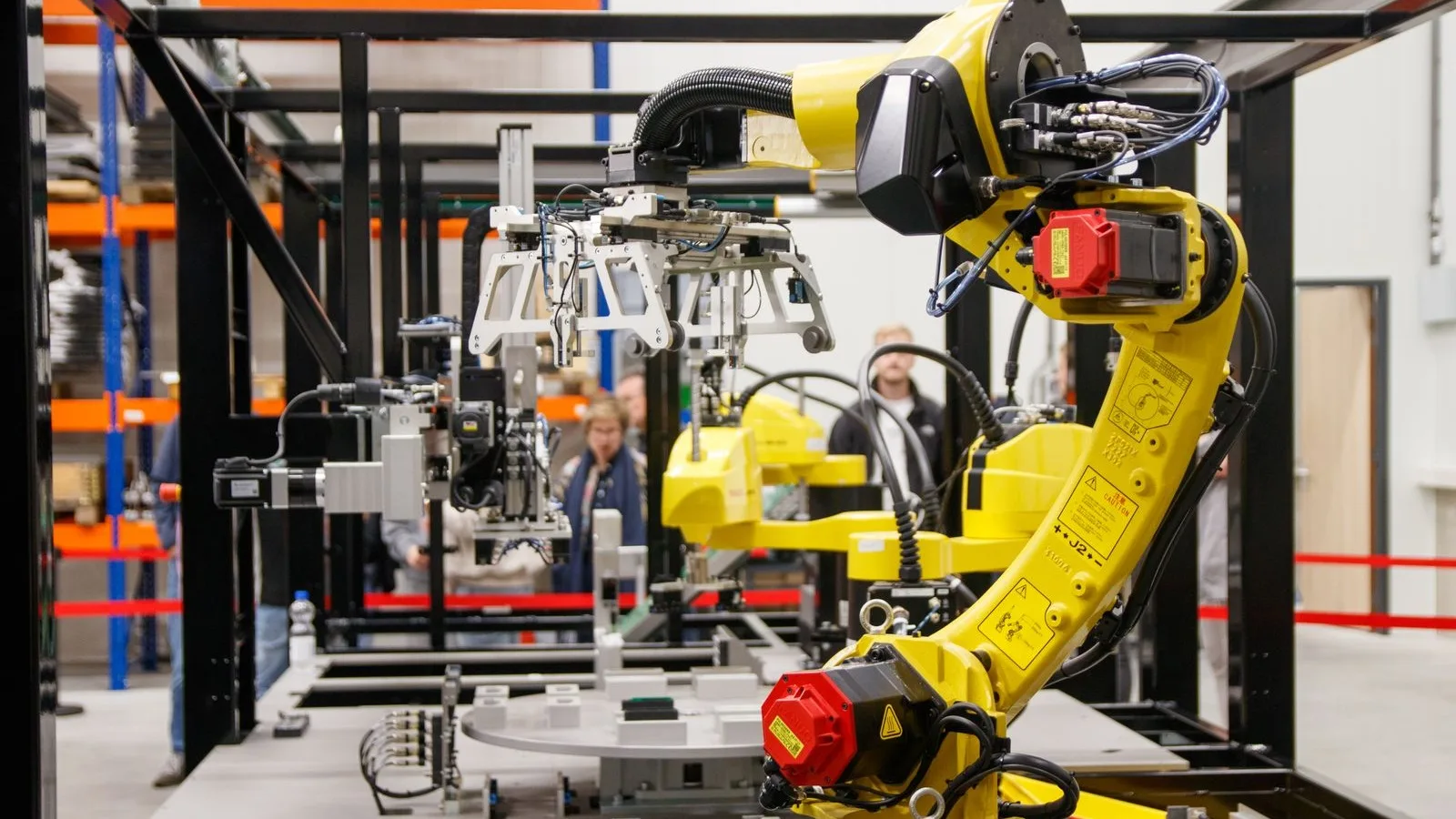
Cornellà is a town of mid-sized companies
Not micro-businesses, and not only multinationals, but the size in between. Of the town's general-scheme affiliations, 9,065 sit in accounts of 10 to 49 workers and 11,555 in accounts of 50 to 249. That is the size at which shifts, handovers and rotas appear.
Idescat also counts 44,272 economically active people and 3,882 unemployed in the town, with 3,990 self-employed in services and 755 in construction. A lot of people coming in and out of places that run to a timetable.
In Cornellà the rota lives on a sheet on the wall
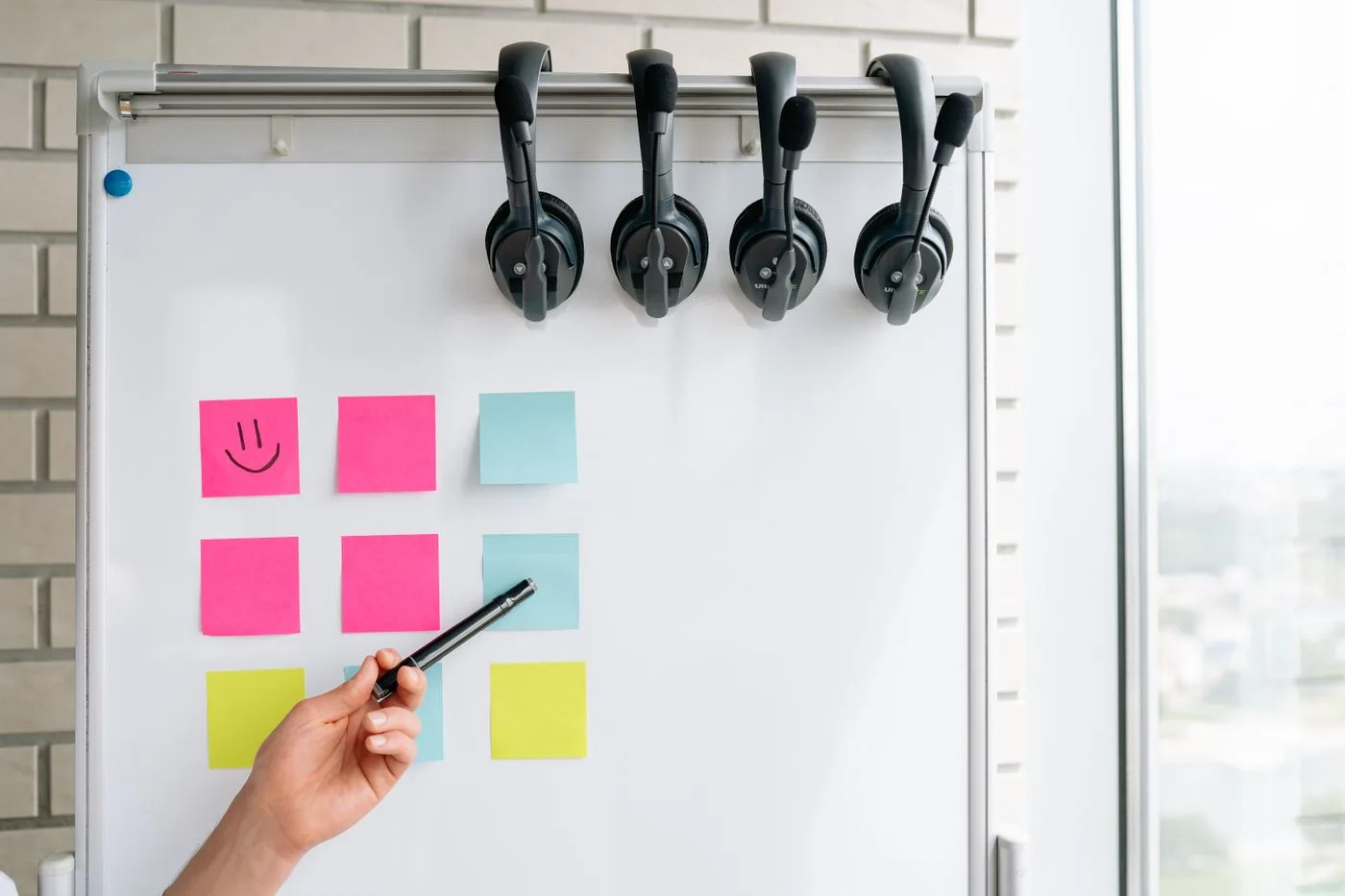
It nearly always starts the same way. Somebody builds the month's rota in a spreadsheet, prints it and pins it up. From then on things happen: one person swaps with another, somebody goes off sick, a Saturday has to be covered. The changes get written on the paper in biro and nothing lands back in the file.
By the 30th, the paper on the wall and the file on the computer no longer say the same thing, and whoever runs payroll has to reconstruct the month by asking around.
Want to know what it would cost you?
We reply the same day. No commitment, no sales pitch.
What breaks at the handover
The changeover is where information goes missing. The machine was left halfway, the urgent order was known to the morning shift, and the warning about running out of material went to somebody who has already gone home.
The four things nobody can find on Monday
- Who was on on Friday afternoon when that happened.
- What was left halfway and at exactly what point.
- Who swapped a shift with whom, and with whose approval.
- How many extra hours each person has already clocked this month.
All four have the same answer, and it is not a huge system: it is recording them as they happen, on the same screen people clock in with.
Keeping a time record is not optional
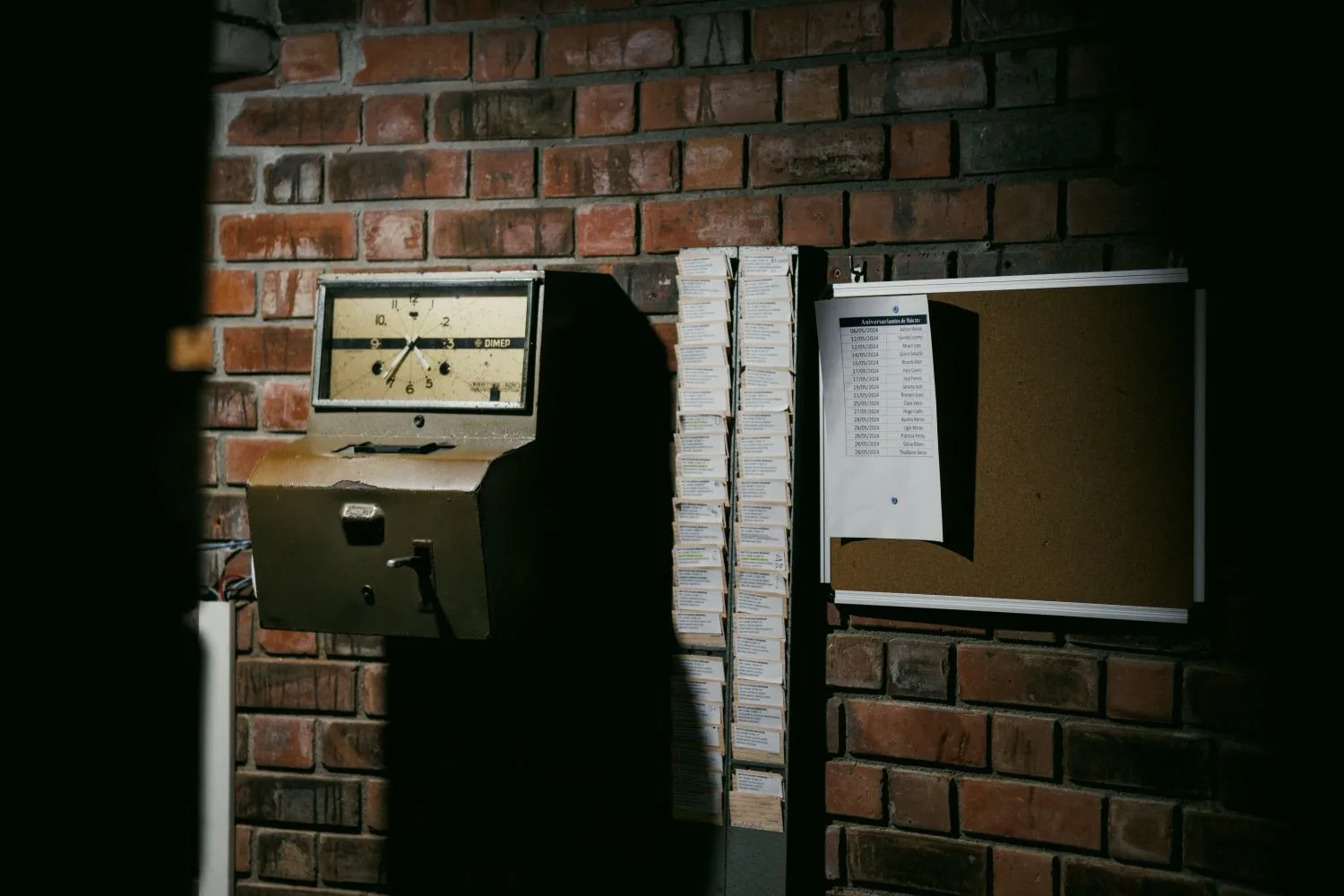
Worth repeating, because plenty of people think it only applies to big firms. Since Royal Decree-Law 8/2019, every company in Spain has to keep a daily record of its staff's working time, with start and finish times, and keep it available to workers, their representatives and the labour inspectorate.
The card clock by the door did that thirty years ago. Today the problem is not clocking in: it is that the clock-in, the rota and the payroll should be one piece of data and not three.
Why the rota spreadsheet ends up failing
It is not the tool's fault: a rota is not a table, it is a set of rules. That two people do not take the same day off, that nobody works two shifts back to back, that the minimum rest between shifts is respected, that whoever holds the forklift licence is always on nights. A spreadsheet checks none of that; a person does, and at eleven at night that person is tired.
When it becomes worth building something instead of fighting the spreadsheet is covered in custom software: when it pays off.
What custom software means in Cornellà, and what it does not
It is not a whole management suite with a module for everything. It is a small tool that does exactly what your company does, with the rules of your collective agreement and the shifts of your plant, connected to what you already have.
And it is not the answer to everything: if the problem is that nobody has decided who approves shift swaps, no program is going to fix that.
The first thing we build: the rota, not the system
Always the same way in. One small piece, live within weeks, solving the specific pain. The rest gets added once that first piece is in daily use.
The three screens to start with
- The month's rota, flagging anything that breaks a rule before it gets published.
- The clock-in, on a phone or a tablet by the door, with one big button.
- The per-person summary, so anybody can see their own hours without having to ask.
With those three, ninety per cent of the problem disappears.
Clocking in has to take two seconds
This is the part that decides whether the project works. If clocking in means opening an app, remembering a password and picking a site from a dropdown, people do not do it, and then you have no record and nothing else either.
What makes people actually clock in
- One button and nothing else. In and out, no menus.
- That it works with no signal and syncs afterwards.
- That everyone sees their own hours straight away, not at month end.
- That fixing a forgotten clock-in is a request from that same screen, not an email.
The rests and limits the rota has to respect
A rota that does not have them built in is a source of trouble: minimum rest between shifts, the weekly rest, night-work limits and whatever the sector agreement says. Spain's national occupational safety institute publishes material on shift-work organisation that is worth reading before designing anything.
If the rules live inside the program, the warning appears while the rota is being built and not two months later.
Overtime and closing the month
This is where the saving shows up on the invoice. With the data collected properly, closing the month stops being an afternoon of asking around and becomes reviewing a list of exceptions: the three or four odd cases, not the hundred and twenty normal ones.
And information appears that did not exist before: which shifts always generate extra hours, which lines run short of people on Fridays, what covering a bank holiday really costs.
We'll tell you in a ten-minute conversation
We reply the same day. No commitment, no sales pitch.
What is not worth building bespoke
- Payroll. That belongs to your accountant and an approved package.
- Bookkeeping. The same.
- Email and calendars. They already exist and they work.
- An internal chat. No company needs its own.
Bespoke is for what is yours and only yours. The rest gets bought or connected.
It has to talk to payroll
The aim is not one more screen: it is that closing the month produces a file your accountant can load without retyping anything. That gets agreed with them at the start, not at the end, and it is usually what turns a decent project into one that genuinely removes work.
The same logic we apply to repetitive tasks in process automation: where to start.
Where the data lives and who gets in
Your staff's working hours are personal data, so where they are stored, who sees them and how long they are kept are part of the brief from day one. Each person sees their own; the manager, their team's; and access is logged.
If you also keep customer records in the same place, it is worth reading a CRM for small businesses, which covers exactly that.
What we need from you
Less time than you would think, but from the right people.
The three people who have to be there
- Whoever builds the rota today, because they are the one who really knows the rules.
- Somebody from the floor, who will tell you whether the button can be pressed wearing gloves.
- Whoever closes the month, so the output file is the one they need.
Two one-hour meetings and access to a few real rotas is plenty to start with.
How long it takes
The first version, with the rota and the clock-in, can be running in a few weeks and gets tested with one shift before it reaches everybody. What stretches these projects is not the programming: it is the rules nobody had ever written down and that have to be decided for the first time.
What custom software in Cornellà de Llobregat costs
Why there is no published rate
Our prices publish the website and presence fees, but not one for custom software: that goes per project, with a fixed quote in writing before anything starts, because the price depends on what has to be built. What is fixed is the commitment to close it beforehand, not afterwards.
And if, on looking at it, we see that an off-the-shelf product solves your case, we say so. The full service is custom software development, and when the job is joining up things you already have, it is process automation.
The Kit Digital has a category for this
Process management is one of the programme's categories, so it is worth checking before paying for everything out of your own pocket. What it is and how it works is in what the Kit Digital is; the calendar and the amounts are published by the government and we do not make them up.
What we do in Cornellà, service by service
Software is one piece. If you also need to be found, that is in SEO in Cornellà and in digital marketing in Cornellà; if what is missing is the website, it is in web design in Cornellà. And if what is on your mind is putting artificial intelligence into some process, start with which tasks to automate with AI.
We are in Sant Antoni de Calonge and we come down to the Baix Llobregat
We work from the Palau Firal in Sant Antoni de Calonge with companies across the provinces of Girona and Barcelona. The first visit is on the shop floor, because a rota cannot be understood over the phone; after that, most of it is handled remotely.
If you want us to look at how you put the shifts together today, write to us through the contact form or by WhatsApp and we will tell you what can be taken out of the way.
Tell us what you need and we'll give you a price
We reply the same day. No commitment, no sales pitch.