

Almost every business we talk to has a website. Very few know whether it's any use to them. Does anyone come in? Where from? Do they reach the pricing page or leave before? Does anybody write through the form? Most have no idea, and not out of laziness: it's that nobody has ever explained it to them in plain words. That's what web analytics is for: to stop flying blind.

What web analytics is (and what it isn't)
Web analytics is, quite simply, counting what people do when they land on your site: how many come in, where they come from, what they look at, how long they stay and how many end up calling or messaging you. It's not spying on anyone, and you don't need a degree to understand it. It's the same thing you do at the counter when you notice a product isn't selling and move it somewhere else, only with the website, where you can't see the faces.
Nor is it piling up charts to feel important. A dashboard full of colourful curves that nobody looks at isn't analytics, it's decoration. Good web analytics comes down to a handful of figures that tell you something useful: what's working, what isn't, and what you should change this week.
Why your business needs web analytics, even if you're small
There's a widespread misconception: that measuring is for big companies with a marketing department. It's exactly the other way round. When your budget is tight, every euro counts double, and you can't afford to keep paying for something that brings nothing in «because we've always done it». Web analytics is what tells you, in black and white, which ad, which channel or which page is actually bringing you customers and which is just spending.
Deciding on gut feeling is expensive. «I reckon a lot of people come from Instagram» is a sentence that costs money if it turns out that, looking at the data, half your customers arrive by searching for you on Google, a channel you'd left abandoned. Measuring doesn't remove instinct; it puts it to the test and sometimes saves you a nasty surprise.
And there's one thing only measuring gives you: an early warning. A website can stop bringing in customers from one month to the next —a change at Google, an error no one has spotted, a page that's broken— and without data you only find out once the phone has been quiet for weeks. With web analytics you see it the moment it happens, not after it's done the damage.
The five things you really have to look at
You don't need to watch a hundred metrics. With these five, checked once a month, you already make better decisions than 90% of the businesses on your street.
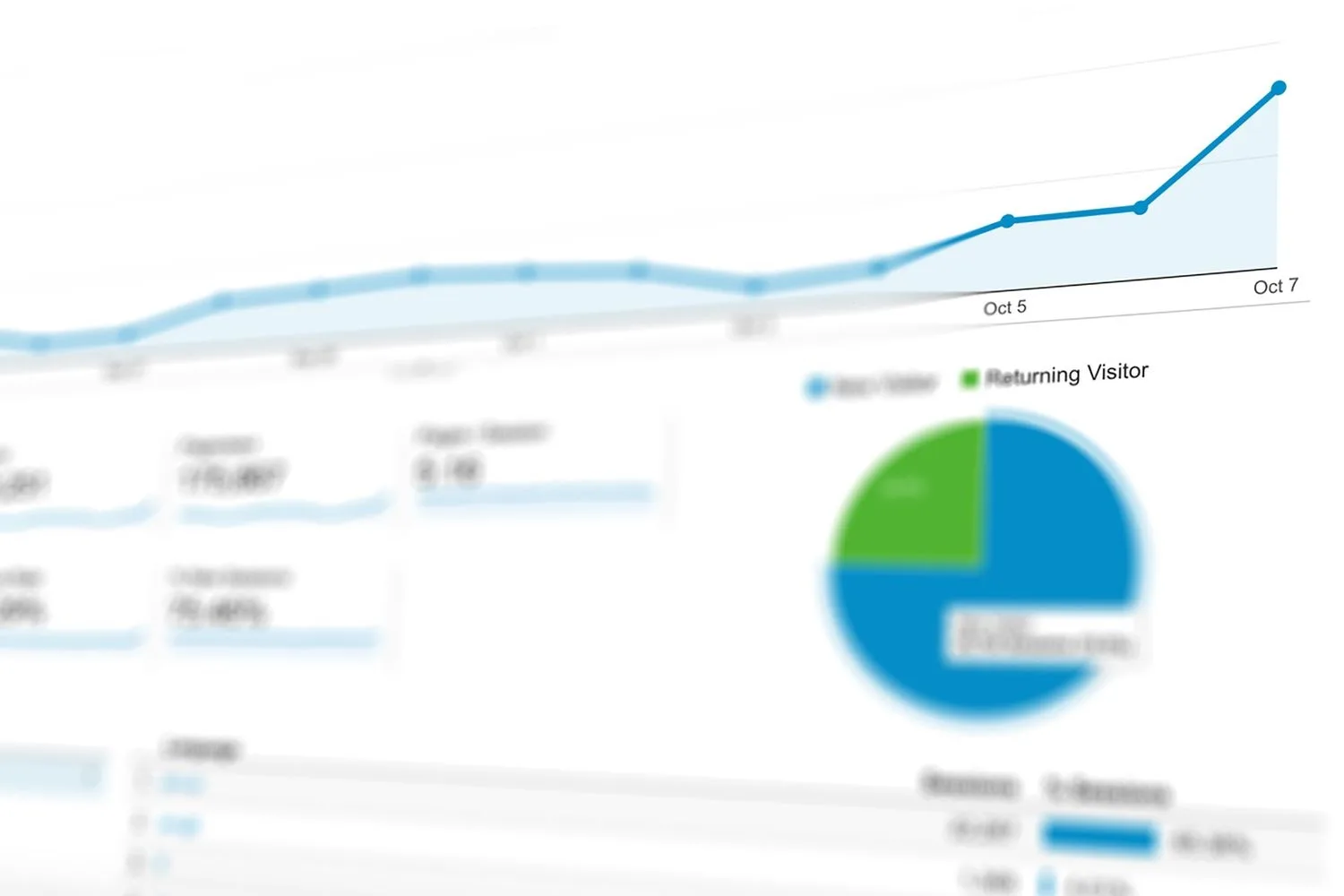
1. How many people come in (and whether it's rising or falling)
The number of visits on its own says little; what matters is the trend. Are more people coming in than three months ago, or fewer? A slow month is nothing, but three months falling in a row is a sign that something has broken or that a competitor is eating your ground.
2. Where those people come from
It's not the same for your visits to arrive from Google, from social media, from a link on another site or by typing your address directly. Each channel is worked differently, and knowing which one brings you customers is half the battle. We cover it more calmly in where your customers come from, which is probably the most profitable figure of all.
3. What they look at and what they ignore
Analytics shows you which pages people visit and which ones nobody sets foot on. If it turns out hardly anyone reaches your pricing or contact page, the problem isn't your offer: it's that they're hidden. Sometimes moving a button or a link changes the month.
4. How many get in touch: the conversion
This is the figure that pays the bills. Out of every hundred people who come in, how many do what you want: tap the WhatsApp button, fill in the form, call? That's the conversion, and it matters a thousand times more than bragging about visits. A thousand visits with not a single contact are worth less than a hundred visits with ten calls.
5. Whether they're looking from a phone
Let me give you the answer up front: most of your people look at you from their phone. If your site is slow to load or looks bad there, you're losing out right where almost everyone is. Why it happens and how to fix it is in why your website is slow on mobile.
Want to know what it would cost you?
We reply the same day. No commitment, no sales pitch.
What you measure with: free tools, no fuss
The good news is you don't need to spend a euro to start. The two serious tools are free. Google Analytics tells you what people do inside your site (how many, where from, which pages, how many get in touch). And Google Search Console tells you how Google sees you: which searches you show up for and in what position. With those two, properly set up, you have 95% of what a small business needs.
That said, measuring isn't a free-for-all: it has to be done while respecting the privacy of the people who visit you. In Spain that means asking permission for measurement cookies with a proper notice, as Spain's data protection authority, the Agencia Española de Protección de Datos, points out. You can measure and follow the law at the same time; it just has to be set up right from the start.
From numbers to decisions, which is what matters

Data isn't for winning an argument, it's for changing something. A few examples of the kind we see every week:
- 70% come in from a phone and the site is slow. Decision: fix the speed before anything else, because that's where the majority is.
- Lots of people arrive but nobody gets past the first page. Decision: something on that page is putting them off (loading, message, trust); you review that one, not the whole site.
- All the traffic comes from social media and none from Google. Decision: there's an untapped goldmine; you work on search engine positioning so you don't depend on a single channel.
- A thousand visits and zero contacts. Decision: the problem isn't the traffic, it's the site; you don't need to bring more people, you need the ones who come in to write to you.
That's the real work: turning a number into a concrete action. Without that, web analytics is an expensive hobby.
How much it costs to measure your website
Setting up basic measurement shouldn't be an extra they charge you for separately, and in our case it isn't. The prices are published on pricing, with no surprises.
- Tu Landing: 100 € a month and Tu Web: 200 € a month. Both come with measurement in place and with the domain, hosting, email and maintenance included, and the domain in your name.
- Presence plans: 400, 750 and 1,500 € a month. Here it's not just measured: someone looks at the numbers every month, sends you a clear report and suggests what to change. That's the difference between having data and using it.
All plus VAT and with no lock-in. For what fits in each size of site there's how much a website costs, and if what you want is for someone to run the measurement and the campaigns, that's what our digital marketing service is for.
We'll tell you in a ten-minute conversation
We reply the same day. No commitment, no sales pitch.
Where to start
The first thing is to find out whether you're already measuring anything. Many sites have had Google Analytics installed for years and nobody has ever looked at the dashboard; others have nothing at all. In five minutes we'll tell you which of the two you're in and which four figures you should look at to start deciding with your head.
Write to us through the contact form or on WhatsApp and we'll take a look at your site, no obligation. If you already have data, we'll translate it for you; if not, we'll get it running.