

Picture a florist in Gràcia with 4,000 followers on Instagram. A year ago, a video of a peony bouquet took off, and since then people have been messaging from Madrid, Milan and Mexico to ask if they ship. Meanwhile, the neighbour who walks past every morning has no idea they do flowers for offices, and the bar on the corner still buys its own at the market. The account grows and the till doesn't notice. It happens to plenty of business profiles in Barcelona: they're built for “Barcelona” in general, while the customer who pays lives or works a few streets away. Social media management in Barcelona that fills a shop starts right there, with getting found by the people nearby.
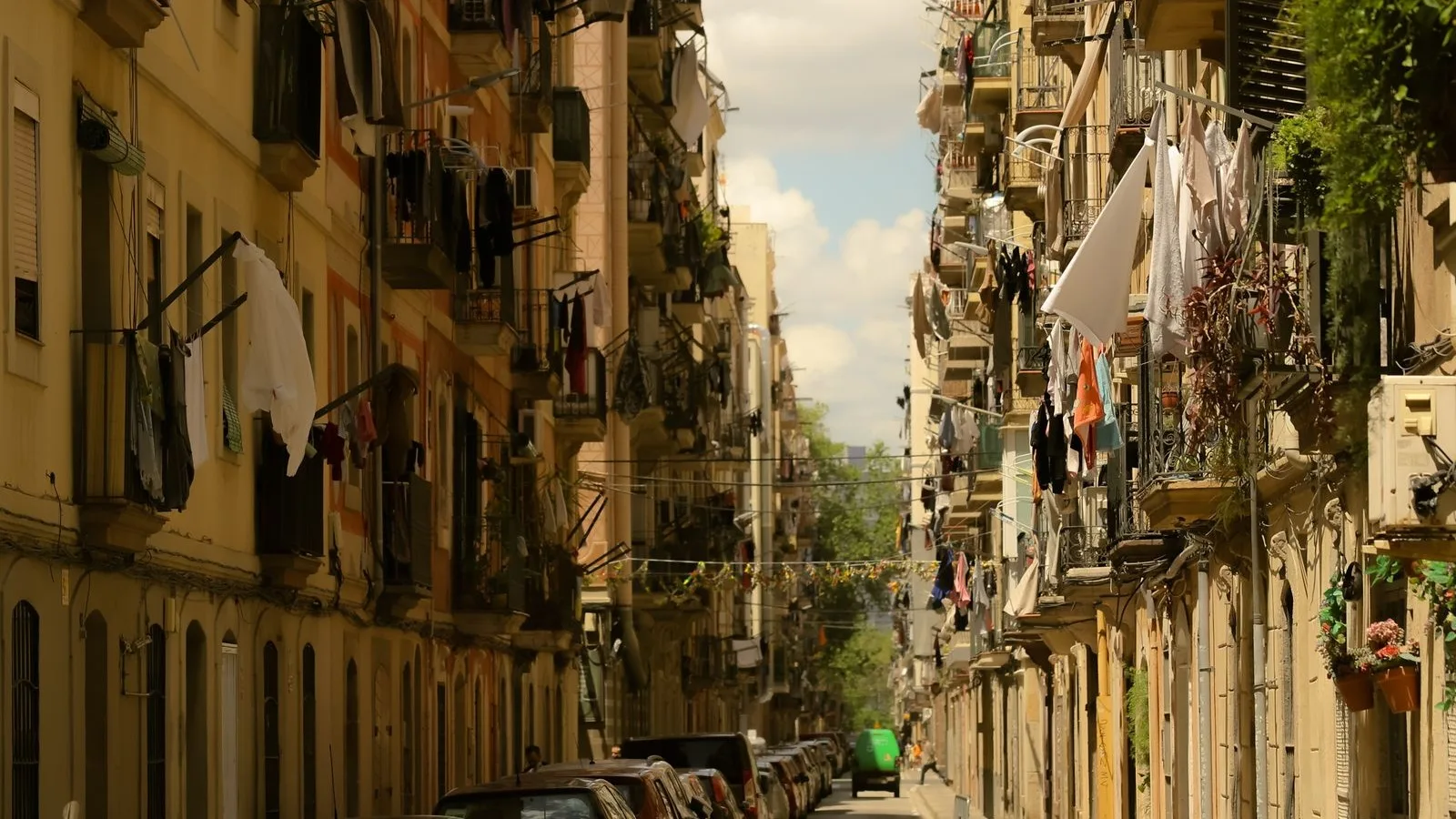
Social media management in Barcelona: your customer lives nearby
Barcelona has 1,713,247 residents, according to Idescat, officially split into 10 districts and 73 neighbourhoods. A hairdresser, a language school, a garage or a set-menu restaurant lives off a handful of them: its own, the ones next door and the people who work in the area. Nobody crosses the city for a haircut when there's a good hairdresser two streets away.
And those people check social media before they decide. The IAB Spain Social Media Study 2026 estimates that 86% of internet users aged 12 to 75 in Spain use it, around 33.1 million people, and that for 44% it influences what they buy. More than half, 54%, use social media to look things up before buying online, and Instagram is the platform they turn to most for that.
Being where people are doesn't mean they'll find you. If your profile talks about the whole city, you're up against every business in the city. If it talks about your area, you're up against the ones in your area, and there are far fewer of those.
Get your business onto the Instagram map
Instagram has a map, and your premises can be on it. Its help centre explains how: your business address comes from the Facebook Page connected to your professional account. You fix it there, connect the account from the Instagram tab and, within 48 hours at most, the business shows up on the Instagram map and can be tagged in posts and stories.
It takes ten minutes. Check it even if you think it's done: if the Facebook Page has an old address, that's the one Instagram shows. While you're at it, check the Contact button: a professional account lets you add directions, a phone number and an email address, and it's the first thing people tap once they've decided to come. The map where you have most at stake is still Google's, through your Google Business Profile; Instagram's adds to it rather than replacing it.
Tag your premises in every post, not “Barcelona”
Every photo and video can carry a location. According to Instagram, anyone who taps that location sees your content alongside what other people have tagged at the same place, on the map. Tag “Barcelona” and your post gets mixed in with photos from the entire city. Tag your premises and it sits with what your customers post when they visit, and whoever taps it ends up at your door. When you do something elsewhere, at a fair or the neighbourhood festival, tag that place.
Write the neighbourhood where Instagram reads it
Instagram's search matches what people type against usernames, bios, captions, hashtags and places, as the platform itself explains. Put the name of your neighbourhood in your bio and captions, spelled the way people spell it: Gràcia, Sant Andreu, Poblenou, Sants, Horta. That way someone searching “hairdresser Sant Andreu” inside the app finds you, and your neighbours see straight away that you're one of them.
Want to know what it would cost you?
We reply the same day. No commitment, no sales pitch.
Post what's happening on your street
What works on a neighbourhood business's profile looks very little like a postcard. The Sagrada Família doesn't set you apart from anyone. Your shop window, the bakery at seven in the morning, the Saturday queue or the face of whoever serves does. What performs best is nearly always the real thing: your team, your premises, your product.
Four kinds of post that tend to work for a shop or a service business:
- This week's news: the menu, what's just come in, the slot still free on Thursday, opening hours over the holidays.
- How you do it: the process, the mistake you see every week, what people ask at the counter.
- Who's behind it, with names. In a big city, knowing who'll be serving you counts for a lot.
- Your street: the market, the square, the roadworks that blocked the pavement, the traders' association party.
We cover what social media is actually for in a small business, and how often to post, in social media for local businesses. Here we'll stick to what changes because you're in Barcelona.
Barcelona's calendar gives you half a year of posts
The city runs on a calendar everyone knows: Sant Jordi on 23 April, Sant Joan's Eve, the Festa Major de Gràcia and the Sants festival in August, La Mercè in September, back to school, and the Fira de Santa Llúcia before Christmas. Every neighbourhood has its own festival on top of that. People already have these dates in their heads, so a post that hangs off one of them needs no explaining.
You don't have to dress up as a bookshop on 23 April. The question is what your customer is doing that week and how you can help. A hairdresser knows everyone wants to look their best for the December dinners. A garage knows people want the car checked before they leave in August. A language school or a gym knows September is when everyone signs up. We write it into each month's plan a month ahead, because something dreamed up the night before shows.
If you close in August, say so
Plenty of Barcelona businesses pull the shutters down for a few weeks in summer. Say so in your stories and on your profile: which days you're closed, when you're back and what to do if someone needs you in the meantime. A profile that looks open in front of a closed shutter is the worst combination there is. And the day you reopen gives you a good reason to post.
Catalan, Spanish and, depending on who buys from you, English
Barcelona is home to 437,663 people of foreign nationality, 25.5% of the population, and almost 600,000 were born outside Spain, according to Idescat's 2025 figures. Many of them are your customers, just like the neighbours who have always lived there. There's no fixed rule on which language to post in: you write in the language of the people who buy from you.
In practice, the main text goes in the language most of your customers speak and, if needed, a short line in the other one, rather than two long blocks nobody finishes. If you work a lot with people from abroad, say a tattoo studio in El Born or a clinic with foreign patients, English stops being optional. What doesn't work is running the text through a translator and posting it as is, because it shows in the first line. The same goes for your website, as we explain in website in Catalan and Spanish.
Team up with the business next door
On Instagram, two accounts can sign the same post. It's called a collaboration: whoever creates the post invites the other account and, if they accept, the post appears on both profiles and is shown to both sets of followers. You can add up to five collaborators to a post, though not to stories.
For a neighbourhood business it's one of the most useful things going, because the shops on your street have the customers you want, and the other way round. The bakery and the café across the road. The gym and the physio. The bike shop and the mechanic. The music school and the bookshop. A recipe with one's bread and the other's coffee reaches both sets of customers, and costs neither of them a cent.
Content creators work the same way on another scale. Someone who shows their neighbourhood to a few thousand locals can bring you more customers than a travel account with hundreds of thousands of followers scattered around the world. If money or products change hands, say so in the post.
Whoever replies first gets the customer
When there are three similar places within a five-minute walk, a message left unanswered on a Saturday morning is a booking that goes to the corner across the street. Replying is as much part of social media management as posting.
At the start we agree who replies, during which hours, and what always gets the same answer: opening hours, how to book, rough prices. If you'd like us to handle comments and messages, we set that up according to how many you get. And since WhatsApp is the app the most people use, with 94% monthly reach according to IAB Spain, your WhatsApp link needs to be easy to see on your profile and in the caption of any post that invites people to book.

What we check every month to see whether social media brings customers
Followers are the easiest number to look at and the one that decides least. Every month we review other things:
- Messages and WhatsApp chats that come in from social media, and how many turn into an appointment, a booking or a sale.
- Which posts bring them in. Instagram shows insights for each post on a professional account, which lets you repeat what works and drop what doesn't.
- Taps on your profile to call you, message you, get directions or open your link.
- The question at the counter: “how did you hear about us?”. It's the oldest measurement there is, and for a neighbourhood business it's still one of the best.
Those numbers decide the next month. Without them, the work gets judged on gut feeling. If you want to review the one you have now, the questions are in how to tell if your marketing agency is doing its job.
Five mistakes we see on Barcelona business profiles
- Postcard photos, the Sagrada Família or the beach, for a business that doesn't live off tourism.
- No address or opening hours on the profile, or the hours from two summers ago.
- Tagging “Barcelona” and never the premises, so nobody who taps the location ever reaches you.
- Everything in a language your customers don't use, or translated in a hurry.
- Buying followers. Meta's rules, which also cover Instagram, ban buying engagement and followers, and those followers come from anywhere and won't leave you a single customer.
How much social media management in Barcelona costs
Our prices are published on our pricing page, and social media shows up there in two ways.
As part of a monthly plan
Social media posts are included in the Advanced Presence plan, at €1,500 a month: two pieces a month, which can be increased if you post more often. The plan also includes seven articles a month on your website and seven on your Google Business Profile, replies to all your reviews, visibility in AI answers and management of your Google Ads and Meta Ads campaigns.
If you only want social media management in Barcelona
The usual is eight to twelve pieces a month, mixing posts, carousels and short videos. In that case we give you a fixed, written quote after a first, no-commitment conversation. All prices exclude VAT, with no lock-in.
If your budget is tight, you may get more out of starting with your Google Business Profile and your website, as we explain in digital marketing in Barcelona. And if you're thinking about ads, how much to invest is covered in Instagram and Facebook ads.
We'll tell you in a ten-minute conversation
We reply the same day. No commitment, no sales pitch.
Social media management in Barcelona, from the Palau Firal
We're three partners working from the Palau Firal in Sant Antoni de Calonge, with businesses across the province of Girona and in Barcelona. Jordi, who looks after marketing, design and campaigns, prepares your first month's plan and shows you the numbers when it's time to review them. The plan, the copy and the monthly review all work fine remotely. Being there in person makes sense on the day we film and take photos at your premises, which is where the material that works best comes from.
If you already have a profile, send us the link on WhatsApp and we'll tell you the first three things we'd change so people in your area can find you, with no commitment. You can also write to us through the contact form or see what our social media management service includes.
Tell us what you need and we'll give you a price
We reply the same day. No commitment, no sales pitch.