

A website with real photos sells better than one with catalogue images; everyone knows that. What gets overlooked is that the moment a person is recognisable in a photo, their image rights come into play, whether that is your employee, a happy customer or the neighbour who happened to walk past.
We are not lawyers and this is not legal advice. It is what we do on every photo day, after a few scares that happened to other people.
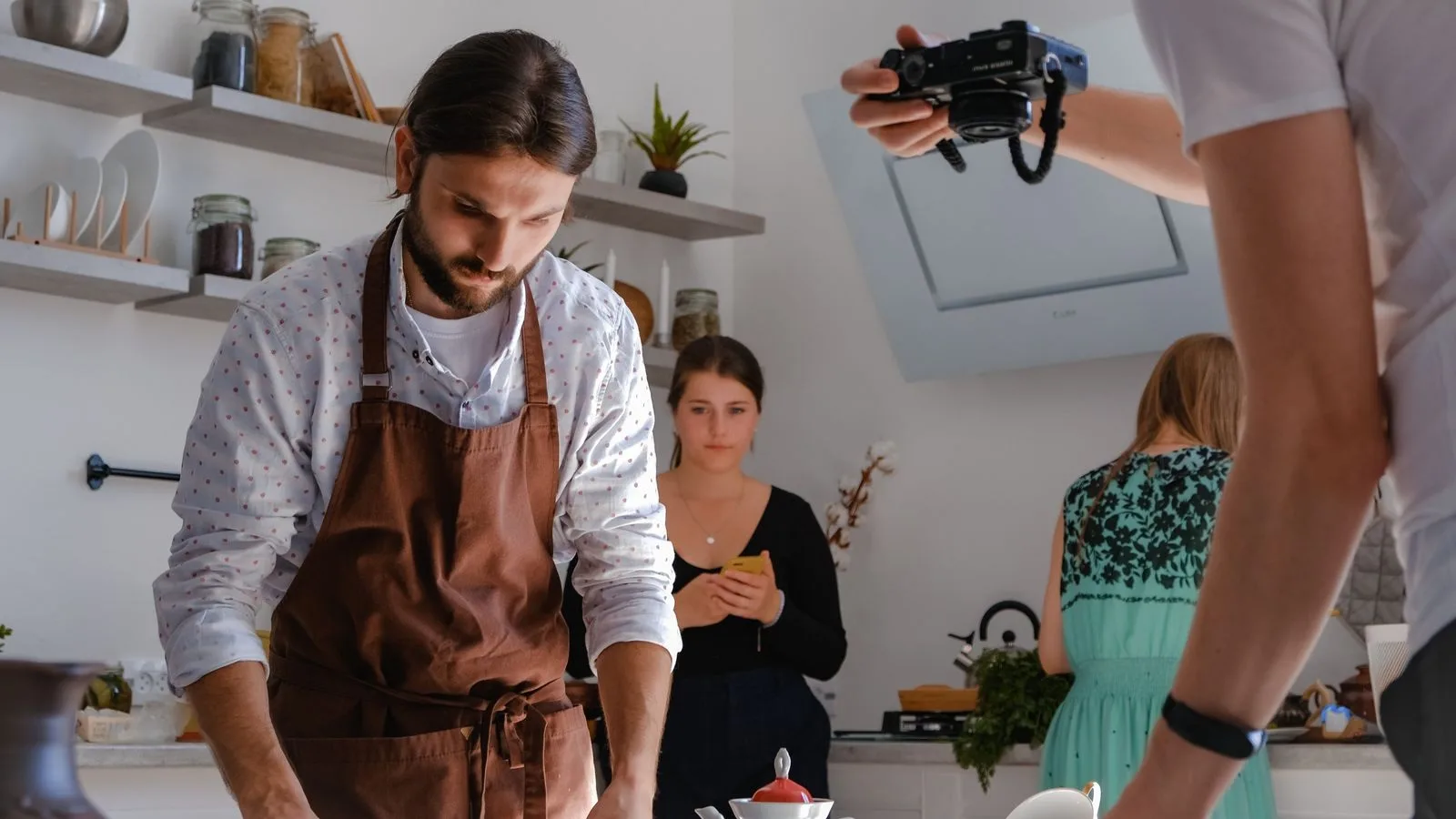
The short rule, so nobody overthinks it
If you can tell who that person is from the photo, you need their permission before publishing it. If you cannot see their face, if it is a silhouette from behind or a pair of hands working, the problem disappears. When in doubt, ask or crop. Which photos you actually need and how a shoot is prepared is in photos for your website.
The four cases that come up every week
1. Your own team
The easiest one to forget, because they are family. The permission has to be genuinely voluntary and it is worth having it in writing, separate from the employment contract. And when somebody leaves, their photo comes down: the one still up two years later is the one that ends in an awkward conversation.
2. Customers inside the premises
The hairdresser with a client in the mirror, a full terrace, the class at the tutoring centre. If they are recognisable, you ask. In practice it is enough to say it before you start and let anyone who would rather not step aside; what does not work is taking the photo and deciding afterwards.
3. Work done in a customer home
Even when nobody appears in it. A refurbished living room, a kitchen or a garden also identify somebody, and a client may not want their house on show. Ask before publishing, and avoid anything that hints at the address: the door number, the letterbox, the car number plate in the driveway.
4. Children
Here the short answer is better not to. If the business depends on it (a tutoring centre, a nursery, a children clothes shop) you need written permission from whoever holds parental responsibility, and even then it is worth thinking twice. A photo of a child on the internet outlasts the business.
Want to know what it would cost you?
We reply the same day. No commitment, no sales pitch.
How to ask without it being awkward
The part nobody teaches. Saying it out loud and casually works: «we are taking photos for the website and social media, if you would rather not be in them just tell me». Nobody takes offence and half the problems are solved right there.
For whoever does appear, a two-line form signed on the same day. You do not need a five-page contract; you need it to exist and to be filed with the date on it.
What that form has to say
- Who publishes the photos: your company name, not «the agency».
- Where they will appear: website, social media, Google listing, leaflets.
- For how long, and that they can be taken down on request.
- How to ask for removal: an email address somebody actually reads.
That covers what is reasonable. The legal pages that go with all of this are in legal pages for your website, and both the Catalan data protection authority and INCIBE material on data protection publish free guides for small companies.
What does not count as permission
Them not saying anything while you took the photo. A sign on the door warning that filming happens. A WhatsApp message from six years ago from somebody who no longer works with you. And the worst one: «they had already posted it themselves, so I assumed it was fine». A photo being public does not authorise you to use it in your business.

When somebody asks you to take it down
You take it down. No arguing, no asking why, and the same day if you can: off the website, off social media, off the Google listing and out of any leaflet waiting to be printed. Then check it is not still alive in the search engine cached version, which is where it usually lingers.
If what has to come down is a sensitive photo published by somebody else, the Spanish data protection agency runs a priority channel for urgent removal requests. Worth knowing it exists even if you never need it.
Stock photos and AI-generated faces
Stock looks like the easy way out and has two traps. The first is that the usual licence does not let you use a model face in a way that suggests they endorse your service or work with you. The second is that the same woman in the yellow hard hat is on your competitor website.
With computer-generated faces the problem is different: there is no person behind them, but they can resemble someone and, above all, in a local business it shows. If you are going to show your team, let it be your team.
What slips into the photo without you noticing
This is not about image rights, but it costs just as much. Before uploading anything, look at the background: number plates, screens with customer data, a delivery note with names on the counter, the whiteboard with phone numbers. And strip the location from the file if the photo is of a private home.
We'll tell you in a ten-minute conversation
We reply the same day. No commitment, no sales pitch.
Where those photos end up, besides the website
It is worth saying when you ask for permission, because the shoot photos end up on the Google listing, on social media and sometimes in an ad. How each piece is used is in social media for local businesses. If somebody only wants to appear on the website and not on social media, note it down and respect it.
Going back over the photos you already published
Almost every business arrives here with old material online. Tidying it up is an afternoon, not a project:
- Open your website and your social profiles and note which photos show a recognisable person.
- Separate the people still with you from the ones who are not.
- For the first group, ask for the form if you do not have it; it signs just as well today as three years ago.
- The second group comes down, without waiting for anyone to ask.
The full list is usually six or eight photos, not a hundred. Starting is the scary part, not the work.
How we handle it on the photo day
We say it at the start, we bring the permission forms printed and we sign them on the spot. Then we hand them back to you, because you are the one publishing and the one who has to keep them. And we leave a list of who appears in which photo, which sounds trivial until the day somebody leaves and only their pictures have to come down.
What it costs to have this in order
Nothing extra. The photo day is included when we build the site, and our prices are published: Tu Landing is 100 € a month and Tu Web 200 €, VAT on top and with no lock-in, with domain, hosting, email and maintenance inside. In the presence plans at 400, 750 and 1,500 € it is included too, along with the articles and the listing posts.
We work from Palamós, with businesses across Girona and Barcelona
The photo day is one of the few things we do in person, and this part is settled in the first two minutes. If you already have photos online and are not sure whether you ever asked, tell us which ones and we will tell you where to start tidying.
Tell us what you need and we'll give you a price
We reply the same day. No commitment, no sales pitch.