
«We want an app for the business». That sentence comes through the contact form several times a month, and it almost always arrives with the same question behind it: what does it cost. The useful answer is not a number, it is another question: how many times a month will the person who has to use it open it? Everything else follows from that.

The three things people call an «app»
Before deciding anything it helps to separate three things that sound alike and cost very differently.
- The store app. You download it from the App Store or Google Play, it installs on the phone, and changing one comma means publishing a new version.
- The website that installs. It opens in the browser, the user adds it to the home screen, and from then on it has its own icon and opens full screen, with no browser bar. It never goes through a store.
- The ordinary website seen on a phone. No icon, nothing to install: a link and that is it.
Most of these conversations start by asking for the first one and end up at the second. Not to cut corners: because it does what was needed and drags along half the problems.
The question that settles it: how often will it be opened
Downloading an app has a toll. You have to find it, trust it, wait, accept permissions and make room on a phone that is always full. That toll only gets paid when whoever installs it knows they will be back.
The rule we use is short: if the person who has to use it will not open it at least once a week, the app ends up deleted. And if it does not get deleted it is worse, because it sits on the third screen and nobody looks at it again.
That is why an accountant you speak to twice a year does not need an app, and neither does a garage you visit every twelve months. What they need is a website that runs well on a phone and a way to be messaged in one tap.
Want to know what it would cost you?
We reply the same day. No commitment, no sales pitch.
The three cases where an app does pay off
They exist, they are clear, and they are almost always the same kind of business. In order of how often we actually see them.
1. Your team uses it every day
Installers, couriers, maintenance technicians, field sales: people who work outside and open the tool ten times a day. Here the installation toll is paid once and pays for itself that same week.
2. You need something the browser does not do well
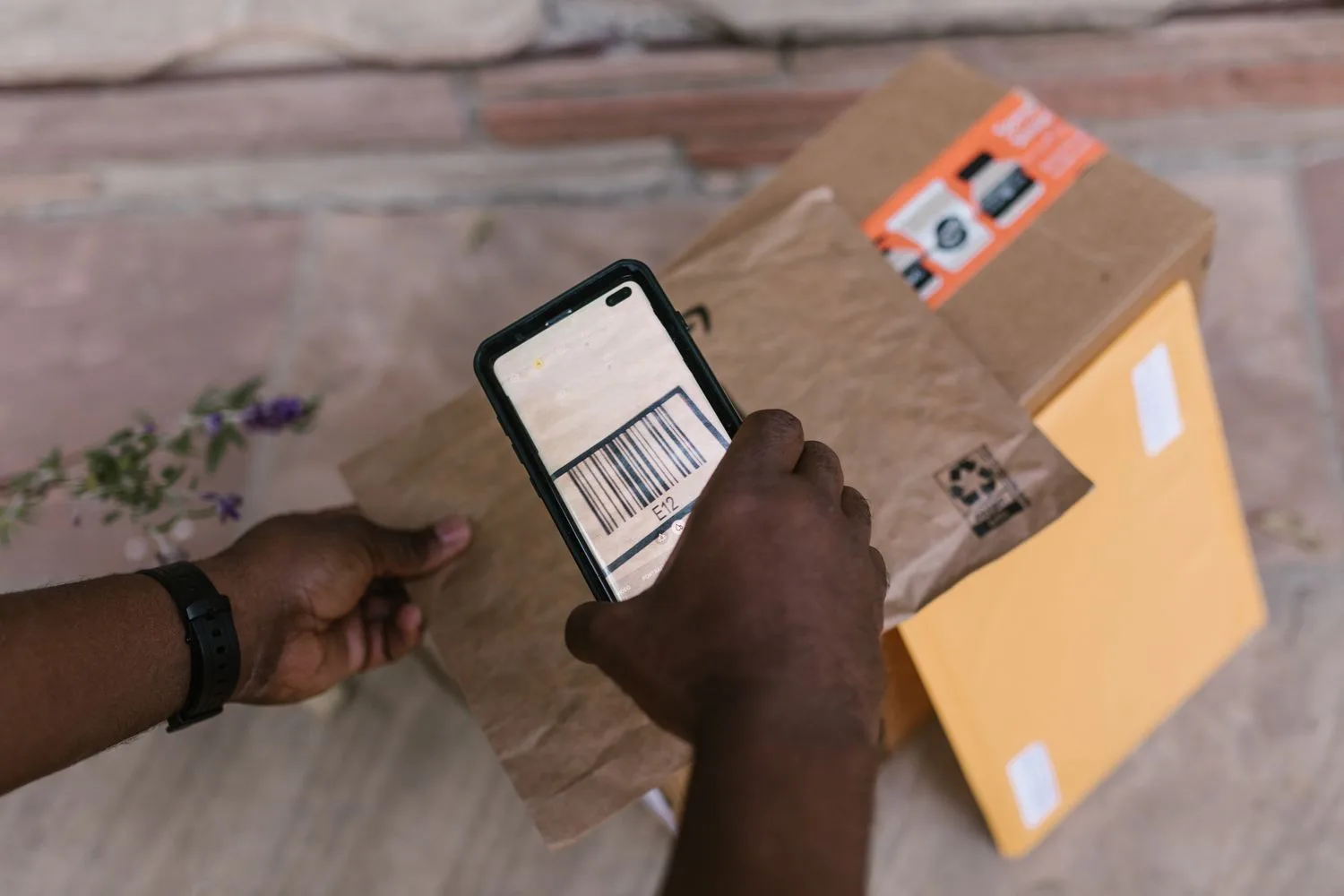
Scanning barcodes one after another, following a route with GPS in the background, talking to a machine over Bluetooth, working for hours with no signal and syncing on the way back. When the job looks like that, a native app stops being a whim.
3. You have customers who come back every week
Repeat orders, frequent bookings, loyalty that already works. If you have a base of people who come back on their own, the app saves them steps. If you do not have it yet, the app will not create it: the product does that, not the icon.
The website that installs: the middle road
This is what solves most of the cases that reach us. A website built to be installed is added to the home screen with its own icon and name, opens full screen, and can work offline if it is prepared for it. To whoever uses it, it is an app; to whoever maintains it, it is a website.
What you gain
- One single thing to maintain, instead of a website, an iPhone version and an Android one.
- It updates itself. You fix something and the next person who opens it already has it, with no reviews and no waiting.
- It is handed out with a link, sent over WhatsApp, and works on any phone.
- No store fees and no developer accounts to renew every year.
And yes, it sends notifications. On Android for years now; on iPhone, since iOS 16.4, as long as the user has added it to the home screen first. That «first» matters, and it has to be explained with a picture, because nobody works it out on their own.
What you do not gain
- It is not in the store, so nobody will find you searching there.
- On iPhone you have to teach people to install it: two taps, but two taps somebody has to explain.
- Some phone features are still out of reach, especially the ones that run in the background.
What an app really costs, and it is not the coding
The development quote is the part you can see coming. What catches people out is the tail it drags for years.
- Two platforms. iPhone and Android are two worlds and, even sharing part of the code, everything is tested and published twice.
- Every change goes through review. A typo on a website is fixed at eleven at night; in an app it is fixed, submitted and then you wait.
- Fixed fees. The Apple Developer Program is 99 dollars a year, and registering with Google Play is 25 dollars, once.
- Compulsory maintenance. Google Play requires the app to target a recent version of Android: fall behind and it stops reaching new phones.
Translated: an app is never finished, it is a subscription to work. Anyone quoting you only the development is showing you half the price.
«I was told an app helps you rank on Google»
It does not. Google shows your website and your business listing; an app is searched for inside the store, which is a different place with different rules. If the goal is being found, the same money goes much further on the website and the map.
And if what is pushing you towards an app is a website that crawls on mobile, that is not fixed with an app: it is fixed by fixing the website. We covered it in why your website is slow on mobile.
We'll tell you in a ten-minute conversation
We reply the same day. No commitment, no sales pitch.
Four questions before you commission anything
- Would whoever has to use it open it every week?
- Is there something the browser cannot do that you genuinely need?
- Who maintains it two years from now, and on what budget?
- Whose name are the App Store and Google Play accounts in?
If any answer is «I do not know», it is not time yet. And that is fine: there is almost always a smaller version that solves most of the problem and can be ready in weeks.
The store accounts have to be in your name
This gets forgotten and then it hurts. An app is published from a developer account, and that account has an owner. If it belongs to whoever coded it, the day you change supplier the app stays there with its ratings, its downloads and its history.
It is the same mess as with the domain, and it is avoided the same way: by asking for everything to be in the company name from day one. We explain it in who owns your domain.
What actually solves the problem most of the time

When somebody asks for an app, underneath there is usually a process that does not add up: job sheets on paper, orders written in a notebook, hours nobody can total at the end of the month, a warehouse that does not match what the software says.
That gets fixed with a tool built to measure, one that opens the same from a phone and from a computer and almost never needs to be in any store. When building it pays off is in custom software: when it pays off, and if the problem is repeated tasks rather than tooling, in process automation: where to start.
Three requests that arrive as «an app» and are not
- «I want customers to book from their phone». That is a website with bookings: online booking for your business.
- «I want to talk to customers on their phone». They already have that app installed: WhatsApp Business.
- «I want every customer record at hand». That is a CRM for small businesses, and it gets used more from a computer than from a phone.
How we approach it
We start with the process, not with the store. We look at what is done today, who does it and how many times a day, and out of that comes the piece that removes the most work. That piece is built first, used for a few weeks and corrected with what using it teaches, which is never what was predicted in the meeting.
If a native app is still needed afterwards, which does happen, it is built on top of the same foundation rather than from scratch. That is custom software, and the same criteria we use to pick a content manager are in WordPress or a custom website.
What it costs
Everything that is a monthly fee is published on pricing: Tu Landing is 100 € a month and Tu Web 200 €, with domain, hosting, email and maintenance included; the presence plans are 400, 750 and 1,500 € a month. All plus VAT and with no lock-in.
Custom software and process automation have no published rate because no two are alike: they go per project, with a fixed quote in writing before we start. If there is an app inside, the store fees and the yearly maintenance are said up front, not at the end.
Where to start tomorrow
Tell us three things through the contact form or over WhatsApp: who is going to use the tool, how many times a day, and what they do instead today. With that we will tell you whether you need an app, whether a website that installs is enough, or whether what you need is something else entirely. If the answer is that you do not need one, we will tell you that too.
Tell us what you need and we'll give you a price
We reply the same day. No commitment, no sales pitch.