

When somebody asks about custom software in Santa Coloma de Gramenet, they are almost never thinking about a six-month project. They are thinking about the notebook on the counter, the repairs whiteboard, or the session passes written in pencil that nobody can count.

A city of very small businesses
The figures explain why the jobs here are small and specific: 4,455 of the municipality 13,245 social security registrations are in workplaces with up to nine people, and retail generates 163.7 million euros of added value a year, with hospitality at 95.5. You can look it up on the municipality in figures portal at Idescat.
Translated: businesses of two, three or five people, with a process of their own that they built themselves and that works, until it stops working.
Before commissioning anything: is it software you lack, or order?
It is the first question we ask and sometimes it costs us the project. If the issue is that everyone records things their own way, new software does not fix it: it makes it more expensive. First you write down how everyone is going to record it, then you decide whether that needs a tool.
Want to know what it would cost you?
We reply the same day. No commitment, no sales pitch.
When you do not need custom software
We say it even though it costs us work, because it works out better in the long run. It is not worth building anything if the volume is low (twenty records a month live perfectly well in a shared spreadsheet), if what you need already exists off the shelf, or if the process is going to change next month because the business is still inventing itself.
In those cases we set the spreadsheet up properly, with closed lists and an automatic backup, and we leave. The general guide on when it pays off is in custom software: when it pays off.
The sign that you do need custom software
Repairs with parts and warranties
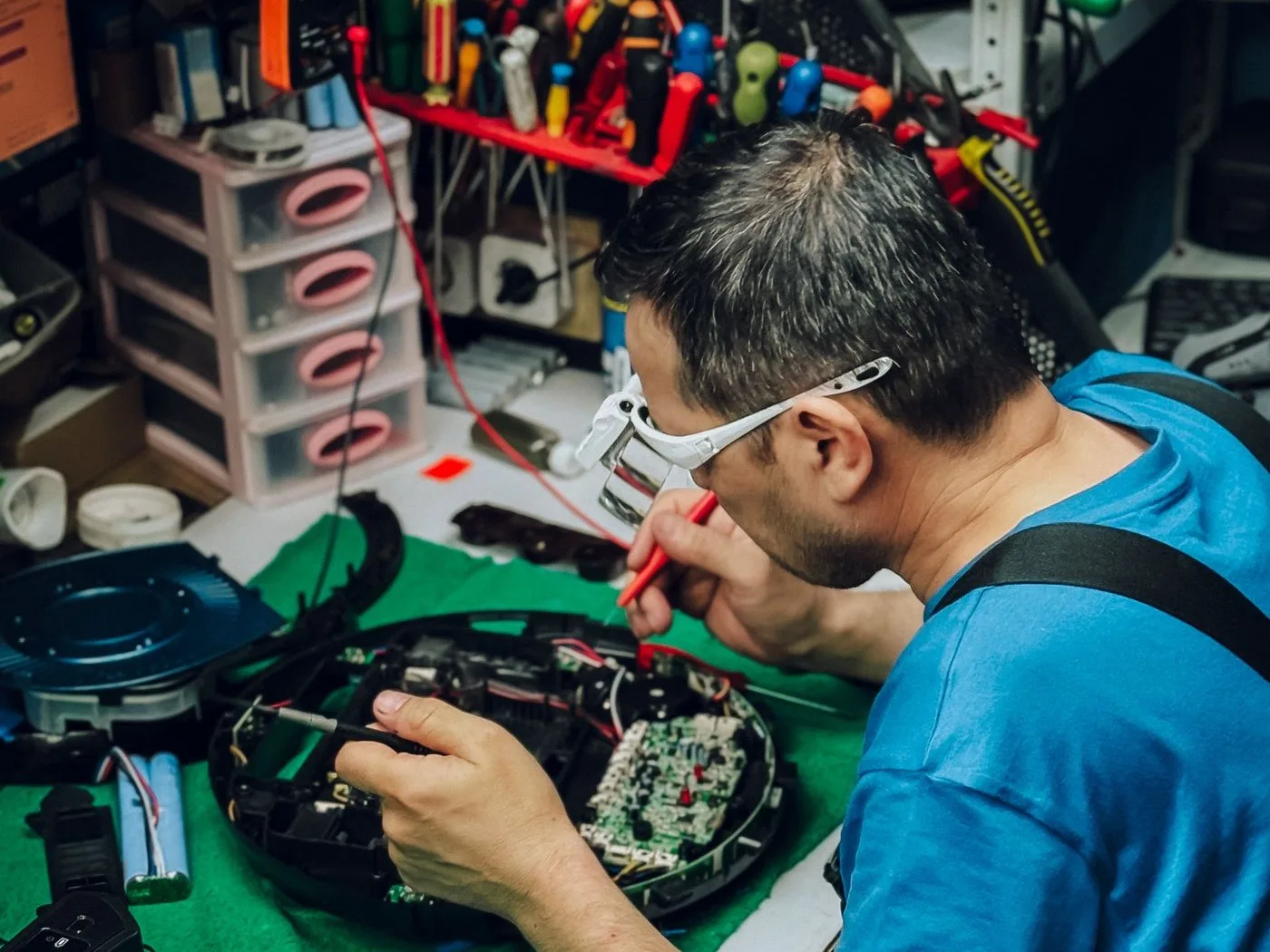
A phone or appliance repair shop needs to know which device came in, which part went into it, what it cost and how long the warranty runs. Invoicing software does not store that, and the whiteboard gets wiped.
Session passes
Hairdressers, physiotherapists, tutoring centres and beauty salons sell packages. Knowing how many sessions are left, who used them and when they expire is half an argument saved every month.
Deliveries around the neighbourhood
The day orders, the delivery sequence and the payments. With fifteen stops within a two kilometre radius, what you need is not a logistics platform: it is a list you can tick off from your phone.
Kit that goes out and comes back
Equipment hire, tools lent between staff, sample cases going back and forth. Who has it, since when, and what condition it came back in.

An example from here, with numbers
A repair shop taking in twelve devices a day was running on a whiteboard and the owner phone. Two problems, always the same ones: calls asking whether it is ready, which interrupt whoever is doing the repair, and warranties that cannot be found when the customer comes back five months later.
What got built was a single screen with the list of devices, their status and their history. With that, whoever picks up the phone can answer without getting up, and a warranty is found by the customer phone number in two seconds. There was no system, there was a list with a search box, and the Saturday spent tidying up stopped existing.
Start with one screen, not with a system
The way not to ruin a small project is to cut it down to the smallest thing that already helps: one screen with a list, a button to add and a search box. If that screen gets used on its own for a month, the project is going well; if people have to be reminded to use it, something does not fit, and it is better to learn that after two weeks of work than after six months.
What gets built first
Almost always the single record: the customer, the device or the pass, with its history underneath. From there you add what real use asks for, not what comes up in a meeting. How to choose what to tackle first is in process automation: where to start.
It has to talk to what you already use
Nobody wants to type the same thing twice. If you already have invoicing software, the goal is for the new screen to pass data to it, not to replace it. And if the business sells online, the public side is built separately: in web design in Santa Coloma we go through what a website here needs.
Where the data lives and who gets in
Even a small tool holds names, phone numbers and sometimes addresses. It is stored on a server with automatic backups, each person logs in with their own user and everything can be exported whenever you want. INCIBE material on cloud services sums up what is worth asking anyone who stores data for you.
What we do not build from scratch
Accounting, payroll and the till software. That already exists, it is tested and it costs less than maintaining it ourselves. Nor a standard online shop, which is built with what is out there. Custom software earns its keep in the odd part of your business, not in the part that is the same everywhere.
We'll tell you in a ten-minute conversation
We reply the same day. No commitment, no sales pitch.
Who will use it matters more than what it does
In a team of three, if one person is not comfortable with a phone, the tool has to be simpler. We test it with whoever will use it from day one, the training takes forty minutes and it is designed for the phone, because hardly anyone here works sitting in front of a computer.
What custom software in Santa Coloma costs
There is no rate card, and our prices page says so: custom software, automation and the artificial intelligence work go by project, with a closed written quote before we start. A first useful screen is usually the smallest job we take on, and the full price is agreed before a line of code gets written.
Only the web and presence side has a published rate: 100 € a month for the one-page landing, 200 € for the site with up to ten pages and 400, 750 and 1,500 € for the plans with articles, the Google listing and campaigns, plus VAT and with no lock-in. If you are looking at grants, the Kit Digital has a process management category, and in the city itself Grameimpuls, the municipal employment and economic development company, publishes support programmes for shops and companies that are worth checking before commissioning anything.
How long it takes and how we work
For a first screen, two to four weeks. We show something every week even if it is half finished, because that is when the exceptions nobody mentioned come out. Then you decide whether a second step is needed or whether that already solved it, which happens more often than you would think.
What to get in writing before signing
Three things, none of them unusual: that the code and the data are yours and can be exported, what happens if one day we stop working together, and what the maintenance covers. If somebody gets vague about this, you already know enough.
We are in Palamós, under an hour from Santa Coloma
The first meeting is in person, at your premises with the process in front of us, which is where it is really understood. After that we work remotely with short demos. If you have a notebook that cannot take any more, tell us what you write in it and we will tell you whether something needs building or whether tidying it up is enough.
Tell us what you need and we'll give you a price
We reply the same day. No commitment, no sales pitch.