

Custom software in Mataró almost never starts with a digitalisation plan. It starts with a size sold twice on the same Saturday: once at the counter and once on the website, with only one left in the warehouse. From there somebody calls a customer to apologise and somebody else spends Monday counting boxes.
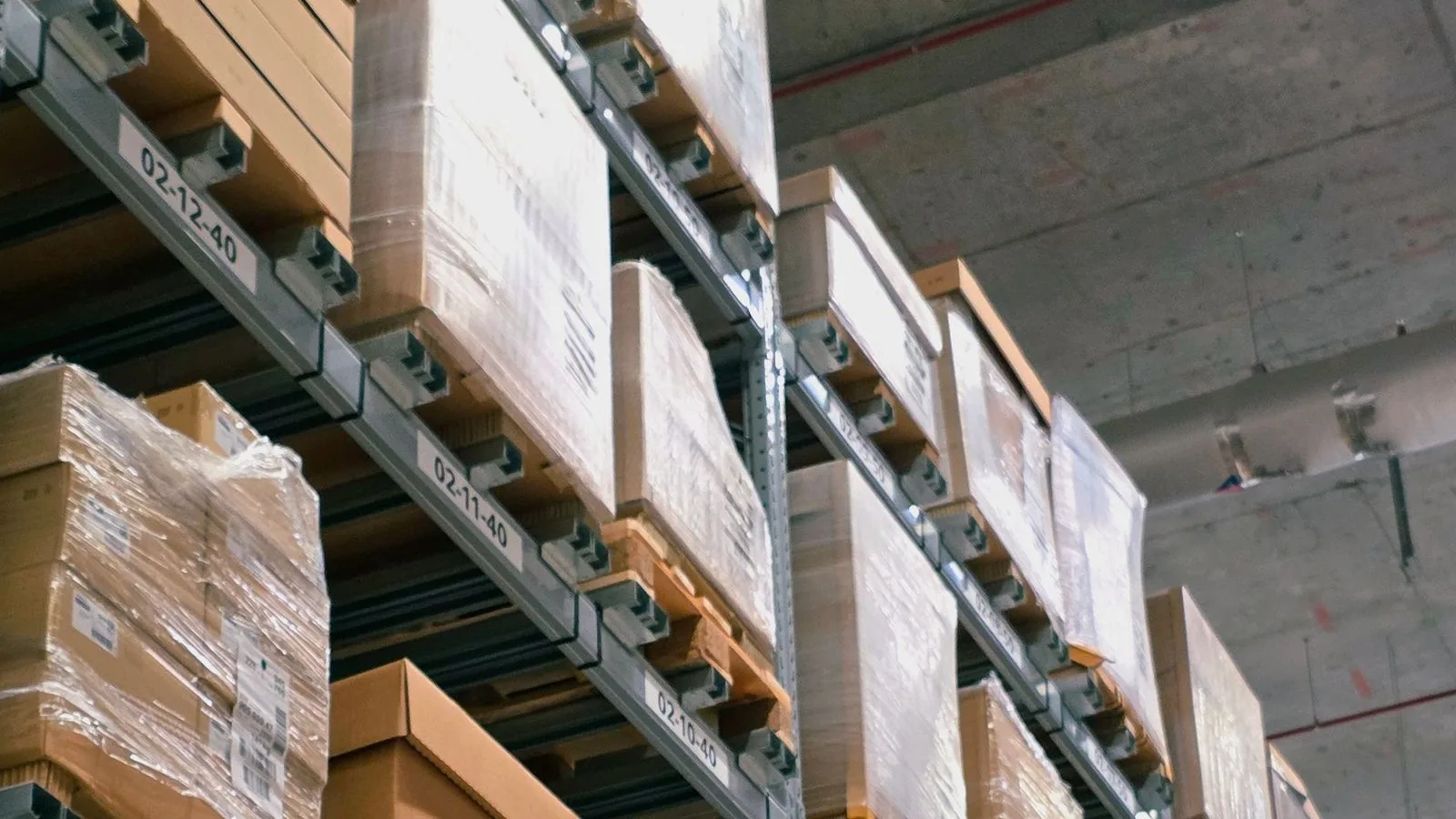
A city that lives on product
Mataró is the capital of the Maresme and one figure shows its engine: retail leaves 564.2 million euros of added value a year in the city, according to the municipality in figures portal at Idescat. And there are 3,643 social security contribution accounts, the dull name for workplaces with registered staff.
Behind those numbers there are shops, wholesalers, workshops and distributors, with a knitwear tradition still alive in the industrial branch that Idescat groups under food, textiles, wood, printing, chemicals and rubber. These are businesses that do not sell hours: they sell things that get counted, stored and moved. And that is where paperwork turns into a money problem.
The three truths about stock
The case we run into again and again: the shop has its count, the warehouse has its own and the website has a third. None of them is lying, which is exactly why it is so hard to fix.
- In the shop, what exists is what is on the shelf plus whatever is in the fitting room.
- In the warehouse, what exists is what the last count sheet says, from three weeks ago.
- On the website, what exists is what somebody uploaded the day the catalogue went live.
In between, ordinary things happen: a return that goes back on the shelf but not into the system, a damaged item nobody writes down, the order a rep promises on Friday afternoon, the piece set aside for a customer in a bag with her name on it. Each of those is tiny. Together they are the reason the stock does not add up.
Want to know what it would cost you?
We reply the same day. No commitment, no sales pitch.
The problem is not the software, it is the variants
Almost every business that calls us already has a management system. The system is not bad: it was designed to sell units, not to sell the same thing in five sizes, three colours and two seasons.
Size and colour multiply
A catalogue of two hundred models in five sizes and three colours is three thousand real items. If each one does not have a single, stable name, the inventory is impossible. Product codes exist precisely for that, and the body that keeps them in order internationally is GS1, the barcode organisation. You do not need the technical detail: you need an item to be called the same thing at the till, on the shelf and on the website.
The same product in three places at once
When you sell in the shop, to wholesalers and online, the same two units are committed three times over. Either there is one place where stock comes off immediately, or somebody is about to sell something that is no longer there.
The season rules
In a seasonal product business, a mistake is not paid for that month: it is paid for at the end-of-season sale. Buying too much is money sitting in boxes and buying too little is lost sales, and both decisions are made with last year figures.
What we build first: one product record
One screen per item with everything on it: name, code, variants, cost and selling price, where each unit is and what is already committed. It is not magic, it is no longer adding up three lists by hand. The test that it works is simple: someone who joined a week ago finds a size without asking anyone.

Second: record the movement, not the count
Stocktaking stops being a Sunday night when every entry and every exit is recorded the moment it happens: the sale, the return, the transfer to the shop, the damaged item, the piece set aside for a customer. With that, the count goes from being the source of truth to being a check.
It is the same principle we apply in any custom software: data is captured where it is born, not transcribed afterwards. If your case is more about deciding whether to build or buy, we cover that in when custom software pays off.
What we do not build from scratch
Accounting, payroll, the certified point of sale terminal and the payment gateway. All of that is already done well by off-the-shelf products that keep up with the regulations, and rebuilding it is paying to reinvent the wheel. What gets built to measure is what makes you different: how your product moves, how units get reserved and how buying decisions are made. The rest is bought and connected.
And if the missing channel is the online one, before programming anything it is worth reading how much an online shop costs: in a product business, a properly built catalogue is half the work.
We'll tell you in a ten-minute conversation
We reply the same day. No commitment, no sales pitch.
What we need from you
Two things. Someone from the business with a couple of hours a week during the launch, the one who knows the warehouse best even if they are the most sceptical. And clean master data: the list of items with one unique name per variant. That last part is usually a couple of afternoons of dull work and it is the difference between a system that adds up and one that inherits the old mess. We do it with you, but we cannot do it alone: you are the ones who know what your products are called.

What custom software in Mataró costs
It goes by project, with a closed written quote before we start, once we have seen how you work. It begins with one piece, usually the product record and the movements, and grows when that one is genuinely in use. The published monthly prices, from 100 to 1,500 euros plus VAT, are for web and digital presence, and are billed separately.
The sum we do with the client is not about hours saved, it is about money standing still: what the goods in the warehouse are worth and what share of that number goes astray at every stocktake. In a seasonal retail business, that figure usually pays for the project on its own.
A note on grants: process management and e-commerce are categories in the Kit Digital catalogue. If the call opens again, part of this work can be paid with the voucher; on the waiting list we look at it with your case in hand.
What to look at after three months
Three homemade, honest measures. The gap between what the system says and what is there when you count a shelf at random. How long it takes to pick an order from the moment it comes in to the moment it leaves. And how many sales were lost to «I think we are out of that». If the custom software is well built, all three move in the first month; if they do not, the build is wrong and it gets fixed.
In the background, retail across Spain is measured with the monthly index published by the national statistics institute: useful for telling whether a weak month is yours or the whole sector.
We work from Palamós, with businesses in the Maresme
We are in Palamós, a little under an hour from Mataró along the coast road. The first visit is at your shop or your warehouse, because stock cannot be understood over a video call; development and maintenance run remotely and support answers the same day. Tell us how your product moves and we will tell you where we would start and what it would cost, with no commitment.
Tell us what you need and we'll give you a price
We reply the same day. No commitment, no sales pitch.