

Process automation in Badalona has one trait the handbooks skip: here the whole company fits in three vans. The registered office is a unit in Bufalà or Progrés; the day's work is in Santa Coloma, Sant Adrià and the far side of Barcelona.
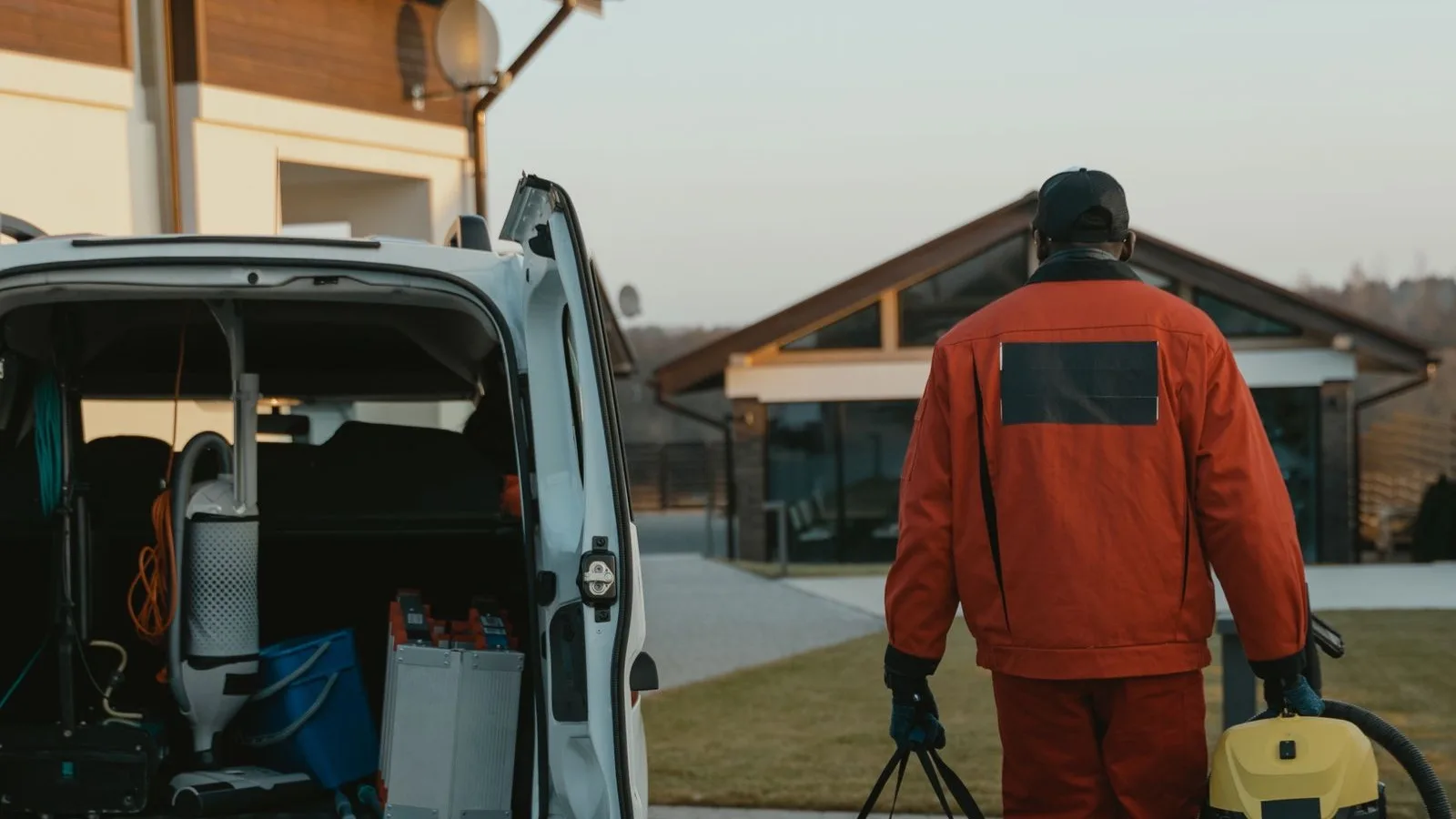
Badalona works away from home, and so do its companies
The town has 6,480 social security registrations in construction and 2,035 self-employed workers in that trade alone, according to the Idescat municipal statistics portal. There are also 13,668 registered commercial vehicles, most of them work vans, and construction adds 372.3 million euros of value a year. Installers, refurbishments, maintenance, cleaning, air conditioning: businesses that live on the road.
We already wrote about the city that sleeps here and works elsewhere in digital marketing in Badalona. Trade businesses are like their neighbours: the base is here, the client almost never is. That changes the problem. In a shop the paperwork stays on the counter; in a trade it rides in a glovebox, twenty kilometres from whoever does the invoicing.
An ordinary week: twenty jobs, three vans and a Friday of paperwork
Jobs come in on the boss's phone: calls, voice notes, a "could you come round this week?" at eleven at night. They get written down wherever there is room. The job sheet is filled in when the work ends, if it is filled in at all, and the before-and-after photos stay on each technician's phone. On Friday afternoon somebody gathers the notebook, the receipts and the screenshots to work out what was done and what can finally be invoiced.
It is not disorder, it is geography: nobody drops by the office because the office is never on the way. And the cost is not the paper either. It is the wasted kilometres, the hour lost on the C-31 over a badly copied address, and the finished job that waits two weeks to become an invoice.
A case from our own files: five people, heating and plumbing, around sixty jobs a month. Together we added up what went on "where are you now" calls, on second visits for missing details and on the Friday afternoon ritual: over twenty hours a month. That is half a salary, spent moving information that already existed.
Want to know what it would cost you?
We reply the same day. No commitment, no sales pitch.
What we automate first when the crew is out on the road
Three pieces, almost always in this order. None of them forces you to change invoicing software or stop work for a single day.
The job sheet, on the phone, with photos
Clock-in and clock-out, materials used, a photo before and after, and the client's signature on the screen. It is filled in on the staircase as the job ends, and it reaches the office by itself. Nobody retypes it, nobody loses it. And if three months later someone claims the job was botched, the photo is right there.
The diary with client alerts
A time slot instead of "sometime in the morning", an automatic message when the technician leaves the previous job, and a reminder when there is a second visit. Every door that does not open is two van hours thrown away, and in the metropolitan area failed visits are counted per week, not per year.
From job sheet to invoice on the same day
If the sheet already holds the hours and the materials, the invoice is a button, not an afternoon. Spain's late-payment law caps payment terms between companies —sixty days; the fine print is in the official gazette—, but that cap is no help if you take two weeks to invoice finished work. Your software can stay: the job sheet feeds the program you already use. We covered connecting programs instead of replacing them in custom software in Badalona.
The fourth piece: what rides in the van
The second visit for a missing part is a double trip that never gets written down anywhere. When the job sheet records the materials used, the restocking list writes itself: what went out this week is what needs loading again, and the supplier order takes two taps instead of a walk around the storeroom to see what is missing. You do not need factory-grade stock control; you need to know what left each van, and the job sheet already knows.
What we do not automate in a trade
Quoting a refurbishment without seeing it. The assessment visit. Deciding whether this afternoon's call is an emergency or can wait until Thursday. The landing-door conversation with the client who cannot quite explain what the boiler is doing. All of that is judgement, and judgement is not delegated to a machine: the machine tidies everything around it so judgement gets room to work.
The thumb test
A digital job sheet that takes more than a minute or more than four taps dies in the glovebox, right next to the paper one. What we build passes a very untechnical test: filling it in with gloves on, standing up, on a landing with no signal. Big buttons, fields that fill themselves in, and automatic sending once the signal returns, even if the garage never has any.
From your side, one thing is needed: the person who suffers the Friday paperwork today, for one morning, to decide what the perfect job sheet contains. Training the technicians is short and works best starting with the keenest crew; the rest sign themselves up once they see Friday no longer has a pile.

What process automation costs in Badalona
It is priced per project, with a closed written quote, after watching how you work for a morning. You start with one piece —the job sheet or the diary, wherever it hurts most—, check the crew actually uses it, and then decide whether there is a second phase. The process automation page explains how we build it; the published monthly plans (100 to 1,500 euros plus VAT) cover web and online presence, and are separate.
One more note: process management is one of the categories in the Kit Digital catalogue. The dates and terms of each call are published by the Spanish government; join the list and we will let you know the moment it opens, with your paperwork already done.
What to check after three months
Three numbers, all three yours. How many job sheets reach the office on their own, with nobody retyping them. How many days pass between finishing a job and sending the invoice. And how many wasted visits there are per week. If the process automation is built right, all three drop in the first month. If one does not, it was built against the crew's habits, and what gets changed is the build, not the crew.
We work from Palamós for the Barcelona area
We are based in Palamós and have spent years working with businesses across the metropolitan area. The first meeting can be at your premises or a video call, and the system is built and maintained remotely: a digital job sheet works the same wherever it is read from. If you want to know which piece would win back the most hours of your week, tell us how you work and we will tell you, no strings attached. We reply the same day, including if you write from the van.
Tell us what you need and we'll give you a price
We reply the same day. No commitment, no sales pitch.