
Ask five firms in Barcelona to quote the same project and five numbers will come back that look nothing alike. The first instinct is to check the total and go with the lowest. The second, months later, is to wonder why the thing was left half finished. With custom software in Barcelona, the gap between quotes is almost never the hourly rate: it is how much of the problem each one actually understood.

Why choosing is harder than finding here
Barcelona holds a large share of Catalonia's business base —you can check the company statistics at Idescat— and the supply of people who write software has grown with it: large consultancies, ten-person studios, very good freelancers, and outfits that subcontract abroad and put a face on it. They all show the same handsome website.
What really separates one proposal from another tends to be far duller:
- Whether anyone sat down with the people doing the work today. The real process is hardly ever the one in the manual. Whoever doesn't ask, invents.
- Who owns the code when the project ends. Some deliver a system only they can touch, and you pay for that every year.
- What happens the day after handover. Software with no maintenance ages fast: server, backups, updates and the small changes that come with use.
Before comparing totals, compare those three. They usually explain the difference between a six thousand euro quote and a twenty thousand euro one for the same brief.
What companies here actually ask for
The sector barely matters, the pattern repeats. One specific process has outgrown what you have, and nothing off the shelf quite fits. What reaches us most often:
- Distributors and wholesalers. Orders arriving by email, WhatsApp and phone, with somebody retyping them into the invoicing software.
- Workshops and service companies. Paper job sheets that then have to be keyed in before anything can be invoiced.
- Professional practices. Case files, deadlines and documents spread across folders, email and two people's memory.
- Clinics and centres. Diary, records and consent forms living in three separate places that never talk to each other.
- Shops with an online store. Stock that never matches between the counter and the website.
The sign that the moment has come
Three of them come up again and again and they are fairly reliable: you run the business on endless spreadsheets, you pay licences for features you never use while the ones you need are missing, and your team spends hours every week on tasks a system would handle on its own. If all three ring true, the problem is no longer about organisation.
Want to know what it would cost you?
We reply the same day. No commitment, no sales pitch.
Working with a team that isn't on your street
Our office is in Palamós and a good share of our development clients are in Barcelona and its metropolitan area: Badalona, Hospitalet, Sabadell, Terrassa, Mataró, Granollers, Sant Cugat or Manresa. In practice it barely shows, and it is fair to explain why.
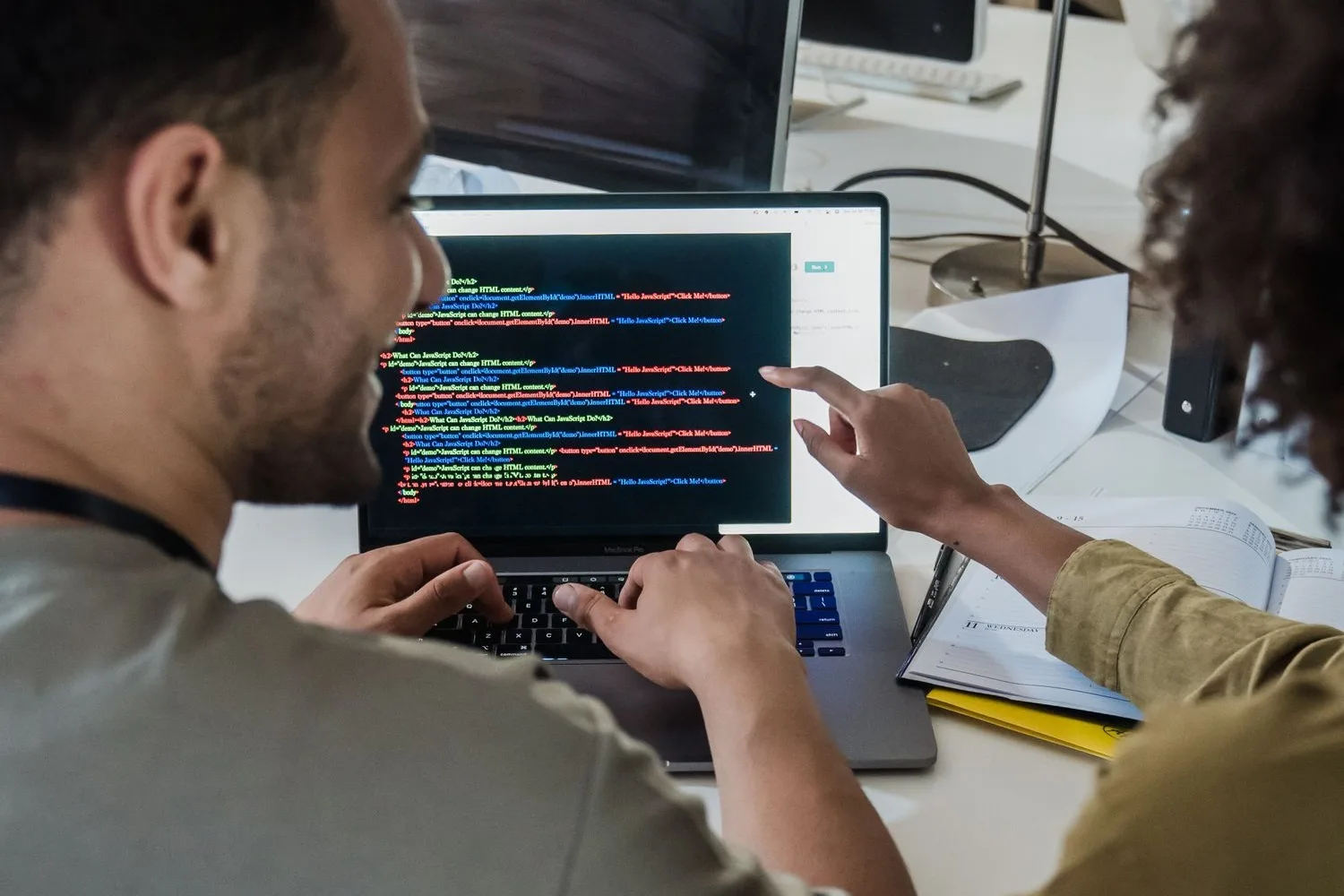
The part that needs someone in the room is the beginning: understanding the process. We go there, sit with the people who do it every day and watch how the work really happens. The rest —building, showing progress, fixing— works just as well over video, and usually moves faster, because nobody has to align diaries for half an hour of questions. For go-live and training we come back.
If somebody insists they need to be in your office every week in order to write code, ask what share of the quote is travel.
What custom software costs in Barcelona
There is no per-page rate as there is with a website. It is quoted by what has to be built, and the price is always made of the same parts:
- Understanding the problem. Meetings with the people who use the process and a written description of what the software has to do. It is the part most often skipped, and where projects get lost.
- Building. Screens, logic, per-person permissions and the connections to what you already run.
- Going live. Migrating the real data, training the team and staying close for the first weeks, which is when the odd cases show up.
- Maintenance. Server, backups, updates and the small changes that use brings. It is a monthly fee, not an optional extra.
We give a fixed quote in writing before starting, after a first conversation with no commitment. The recurring side is published on our pricing page: hosting, website and content from €100 a month plus VAT, and the full presence plans at €400, €750 and €1,500 a month. Development is closed per project because no two are alike. If you want the detail of how that cost breaks down, we explain it in when custom software pays off.
One practical tip: ask for the quote to separate those four parts. Two proposals with the same total can be completely different inside.
Make it talk to what you already have
Almost no project starts from scratch. There is already invoicing software, a CRM, an online shop and, with luck, a website. Custom software that doesn't connect to those creates one more island, and islands get paid for in hours of copying and pasting.
Connections are made through each tool's API, the door programs leave open so others can talk to them. Worth asking before you sign: if your current invoicing software has no API, or a closed one, that changes the project. And if what you want is to get rid of repetitive work without building a whole system, automating the process is sometimes enough.
The data you store belongs to your customers
Any system holding names, phone numbers, records or invoices lands in data protection territory, and there the responsibility sits with the company rather than the developer. The Spanish Data Protection Agency publishes clear guides for small businesses that are worth reading before you commission anything.
On the technical side there are three we always insist on: access per person rather than one shared password, backups that somebody actually checks now and then, and security updates kept current. Add a fourth if your software will issue invoices: under the anti-fraud law, invoicing systems have to meet specific requirements, and it is better to know that before building than after.
We'll tell you in a ten-minute conversation
We reply the same day. No commitment, no sales pitch.

Kit Digital and other grants
Part of a digitalisation project can go through public grants if your company meets the requirements; we are a registered digitalising agent and can handle the paperwork. The official information is on Acelera pyme.
That said, squeezing a project into a grant doesn't always pay: some solutions fit the programme's categories badly and you end up cutting exactly what you needed. When that happens we say so before starting rather than after.
Five questions before you sign
- Who will sit with my team, and for how many hours? If the answer is vague, so is the rest of the quote.
- Is the code mine, and where does it live? Get it in writing, along with access to the server and the repository.
- What does the first month after handover include? That is when the real bugs appear.
- How does it connect to what I already use? And if it can't, what happens instead.
- What does it cost to maintain per year? A cheap project with expensive upkeep isn't cheap.
How we do it
We work in phases and without black boxes: first we listen and diagnose, then we present a roadmap with priorities, realistic timescales and a fixed quote, and from there we build while showing progress. We start with the essentials working and in use, and grow from that point; it beats handing over a whole system nobody has tried.
The code is yours, you talk to the people doing the work rather than a salesperson, and when something isn't right for you we say so even if it means selling less. We also do digital marketing and software under one roof, which is what lets us join your website, your data and your processes into something that works together instead of in pieces.
Tell us what you need and we'll give you a price
We reply the same day. No commitment, no sales pitch.